

Experienced San Diego Breach of Contract Lawyers
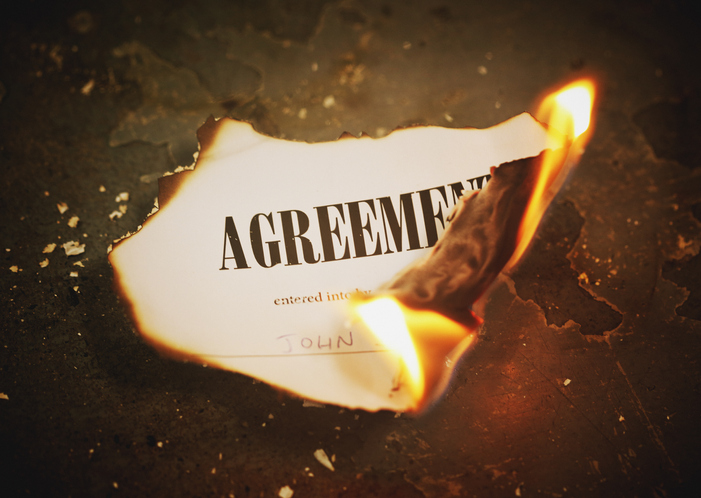 If you are a party to a breach of contract and have suffered losses as a result, you are required to take reasonable and prudent measures to “mitigate” your damages. This does not mean that you cannot hold a party responsible for the breach of contract, it simply means you must make reasonable efforts to limit the extent and expense that results from the breach. Mitigating the damages preserves all legal financial recovery options. We are often asked:
Are there limits on what you can recover for a breach of contract?
What are “damages” and how can you be sure that you have taken appropriate steps to mitigate them?
What happens if there is no attempt at mitigating the damages?
What caused the loss?
What happens if I don’t act?
The Watkins Firm has more than 40 years of proven experience in breach of contract disputes and lawsuits. We take a unique approach to litigation that is specifically designed to resolve your dispute in a timely and cost-efficient manner.
What Losses Can You Recover in a Breach of Contract Case?
 A contract can be breached for a variety of reasons including the failure to pay, poor workmanship or failure to perform. The non-breaching party has the legal right to receive the “benefit of the bargain,” in other words, the benefit it would have enjoyed if the business contract had been completed. The types of losses we pursue for our clients include, but are not limited to:
Compensatory damages – recovery of the losses from what they would have received from the benefit of the bargain, as well as the reasonable and prudent expenses they had to take to find another alternative to fulfill the expectations of the contract.
Liquidated damages – many contracts specify the monetary value of a failure to perform or in the event of a breach of contract.
Punitive damages – rare in breach of contract cases unless fraud or some other circumstance exists. Designed to punish the breaching party and prevent the scenario from happening again in the future.
Nominal damages – when no monetary loss occurs a Judge may elect to award “nominal” damages to the non-breaching party to penalize the breaching party, but these are also rare.
Restitution – prevents the breaching party from being unreasonable enriched by their actions, as in the case where they received goods but did not pay for them. Restitution allows the non-breaching party to recover the value of those goods.
What are Damages and How Do you Mitigate Losses?
 Damages are basically the monetary value of the difference between where the non-breaching party stands and the cost of receiving the benefit of the bargain. It isn’t possible to simply estimate the amount of business you might have lost (opportunity cost). The attorneys at the Watkins Firm must establish a “causal” connection between the effects of the breach and the amount of money that is demanded in the form of damages. For example, if you have to go out and find another vendor to fulfill the benefit of the bargain, and the second vendor costs more than the breaching party was to charge, the damages would include the difference between the two vendors, as well as the cost to find and contract with the second party.
By law, the non-breaching party must act “reasonably” to minimize or “mitigate” the damages associated with the breach. What actions would a reasonable business person take when faced with the challenge of mitigating the damages resulting from the breach? Taking immediate action to find another alternative is one step the non-breaching party can choose to help mitigate the losses. Mitigation might also include attempts to negotiate a “settlement agreement” or other efforts to help the breaching party to fulfill the benefit of the bargain. If the case proceeds into business litigation and the Judge finds that the non-breaching party did not take action to mitigate their losses, it can have a profound effect and reduce the amount of the damages awarded.